We use essential cookies to make our site work. With your consent, we may also use non-essential cookies to improve user experience and analyze website traffic…
DeepInfra raises $107M Series B to scale the inference cloud — read the announcement
Pick a model
You can browse available text-to-image models on the models page.
For example, we'll use runwayml/stable-diffusion-v1-5.
Using the API
curl -X POST \
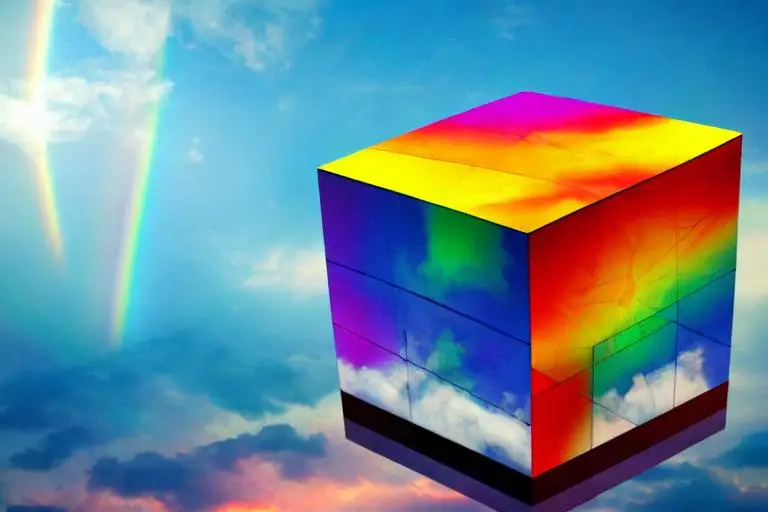
-d '{"prompt": "A photo of a cube floating in space"}' \
-H 'Content-Type: application/json' \
-H "Authorization: Bearer YOUR_API_KEY" \
-o cube.jpg \
'https://api.deepinfra.com/v1/inference/runwayml/stable-diffusion-v1-5'
And check out the output in cube.jpg.
Advanced options
You can check all the available settings on the model page or via the API documentation tab.
Related articles Introducing Nemotron 3 Super on DeepInfraDeepInfra is an official launch partner for NVIDIA Nemotron 3 Super, the latest open model in the Nemotron family, purpose-built for complex multi-agent applications with a 1M token context window and hybrid MoE architecture.
 Getting StartedGetting an API Key
To use DeepInfra's services, you'll need an API key. You can get one by signing up on our platform.
Sign up or log in to your DeepInfra account at deepinfra.com
Navigate to the Dashboard and select API Keys
Create a new ...
Getting StartedGetting an API Key
To use DeepInfra's services, you'll need an API key. You can get one by signing up on our platform.
Sign up or log in to your DeepInfra account at deepinfra.com
Navigate to the Dashboard and select API Keys
Create a new ... OpenCode: Open-Source Claude Code Alternative<p>Open your cloud bill after a month of heavy agent use and the number stops being abstract. Teams report coding-assistant costs in the hundreds of dollars per developer, and some now set token budgets the way they once rationed cloud compute. Then in June 2026 the US government barred non-Americans from Anthropic’s Fable 5, and […]</p>
Introducing Nemotron 3 Super on DeepInfraDeepInfra is an official launch partner for NVIDIA Nemotron 3 Super, the latest open model in the Nemotron family, purpose-built for complex multi-agent applications with a 1M token context window and hybrid MoE architecture.Getting StartedGetting an API Key
To use DeepInfra's services, you'll need an API key. You can get one by signing up on our platform.
Sign up or log in to your DeepInfra account at deepinfra.com
Navigate to the Dashboard and select API Keys
Create a new ...OpenCode: Open-Source Claude Code Alternative<p>Open your cloud bill after a month of heavy agent use and the number stops being abstract. Teams report coding-assistant costs in the hundreds of dollars per developer, and some now set token budgets the way they once rationed cloud compute. Then in June 2026 the US government barred non-Americans from Anthropic’s Fable 5, and […]</p>




© 2026 DeepInfra. All rights reserved.